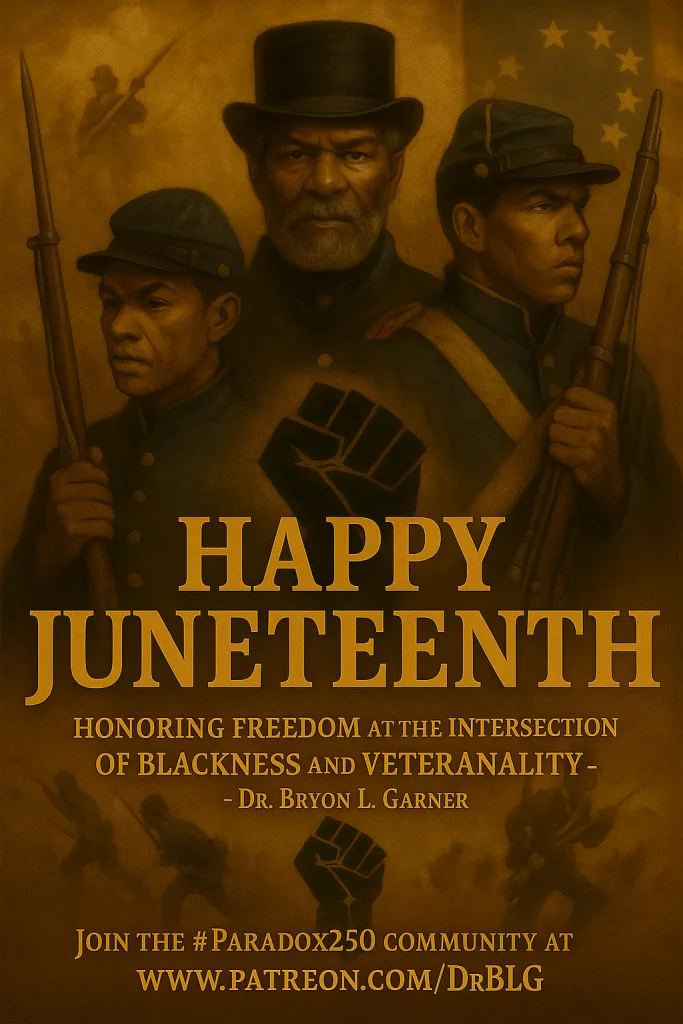
On this Juneteenth, we commemorate not only the emancipation of enslaved Black Americans but also the enduring pursuit of freedom, dignity, and full belonging—a pursuit that continues to shape the lived experiences of Black veterans. While General Gordon Granger issued General Order No. 3 in Galveston, it was the arrival of Union troops—including several regiments of the USCT—that made emancipation a reality for the 250,000 enslaved people in Texas. The order itself had little effect without the military presence to enforce it. Juneteenth is a day of celebration and reflection, a reminder of both the progress made and the unfinished work that remains at the intersection of Blackness, veteran identity, and American patriotism.
This Juneteenth, we must recognize the ongoing disparities that Black veterans face, from barriers to career advancement and healthcare to the psychological toll of navigating a society that remains ambivalent about their full inclusion. The legacy of racial inequity in and out of uniform is not just a historical artifact—it is a present-day challenge that demands our collective action and advocacy. The work of organizations and scholars advancing the cause of Black veterans is essential to building a more just and equitable future, one where the full measure of their service is acknowledged and honored.
Juneteenth is also a celebration of resilience, community, and hope. The sight of armed Black soldiers—many of whom were formerly enslaved themselves—marching through Texas was a powerful image for newly freed people. Their presence not only enforced freedom but also embodied it, demonstrating the transformation from bondage to citizenship. My Black veteranality framework is not merely a lens for seeing what is lacking; it is a framework for theorizing the rich traditions of service, leadership, and patriotism that have long existed within the Black community. The stories of Black veterans—told in their voices—expand our understanding of American freedom and challenge us to live up to the ideals for which so many have fought and sacrificed.
As we honor Juneteenth, let us commit to amplifying the narratives of Black veterans, to confronting the disparities they face, and to reimagining patriotism as a practice rooted in justice, equity, and the full inclusion of all who have served. In doing so, we not only honor the past—we help shape a future worthy of the sacrifices made in the name of freedom.
Join the #Paradox250 community and follow my series, American Paradox: Black Veterans and America 250, at www.patreon.com/DrBLG
Happy Juneteenth.